Xccelerate Live
An open educational community platform
Overview
Xccelerate Live is an education platform that aims to promote the mission of knowledge transfer and sharing among the tech community.
It was originally built on a peer-to-peer marketplace platform called Sharetribe, which served the basic features like listing, profiles, online payment, etc, and was manipulated by our staff at the beginning.
We were gradually hands-off to the customers themselves to create and start their Jam (online events) as we had more active users.
However, a significant drop in the sign-ups and Jammers (attendees) was noticed.
I worked with the product team to figure out the cause and improve our user experience, to not only meet the competitive baseline but exceed it.
We have completely audited and improved our core experience, from a fundamental book and chat experience to new user onboarding and navigation.
Responsibilities
- Stakeholder Interview
- Pain Point Analysis
- Competitive Analysis
- MoSCoW Analysis
- Wireframes
- UI Design & Prototyping
- User Testing
The Process
Using the Design Thinking method, I set out to design a solution that would meet the needs of the target user, the objectives of the company, and technical capabilities.

Discover and Research
Understand the users and discover pain points.

Define the problem
Synthesizing research findings and create value proposition.

Ideate and develop
Ideate and develop solutions with wireframes.

Prototype and test
Prototype and test concepts with potential users.
Research and Problem Definition
In order to understand the problem and the users needs, I conducted user interviews with the attendees, gathered contextual information about the online learning market, and identified a baseline for what users expect from a mentoring service.
User Interviews
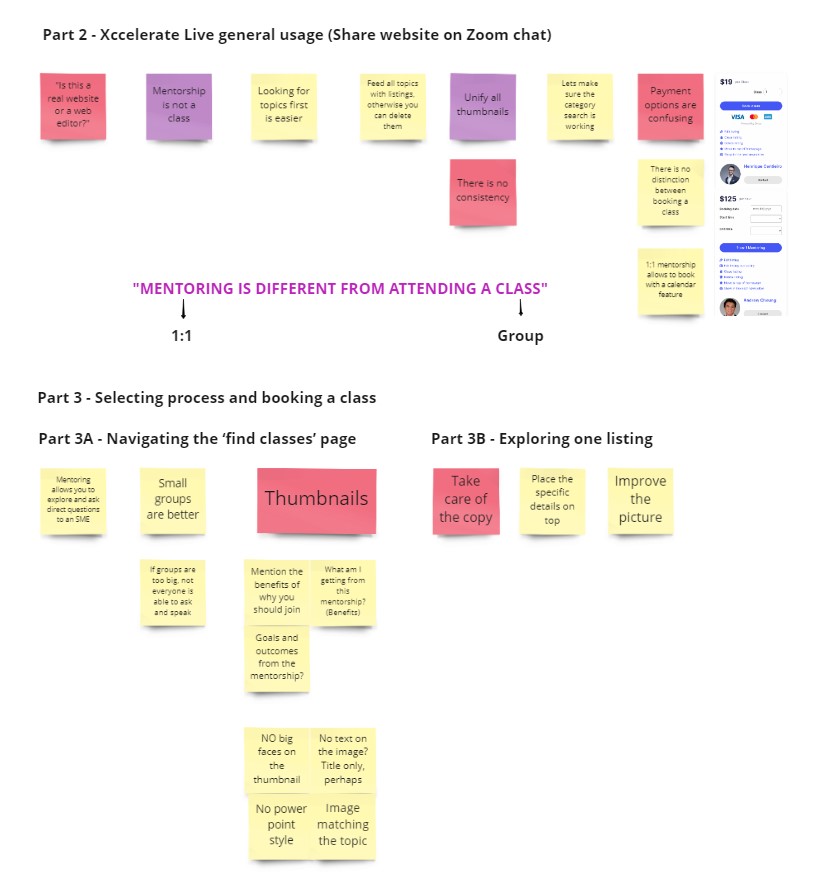
With the help of another UX designer – Justin, we interviewed 10 people in total. All of them have experience in using our platform.
Important Takeaways
Mentees
- Jam was valuable and they would like to further connect with the mentors
- Most of them mentioned there was no flexibility in joining a Jam in their free time
Mentors
- Almost all mentors did not check up on their listing after they posted it
- Most of the mentors were confused in creating a new listing
Research Analysis
To explore what we had learned during interviews, we wrote down insights on Miro board and grouped similar cards together. This led to five clusters that gave us an understanding of the most common issues regarding the book and jam journey.
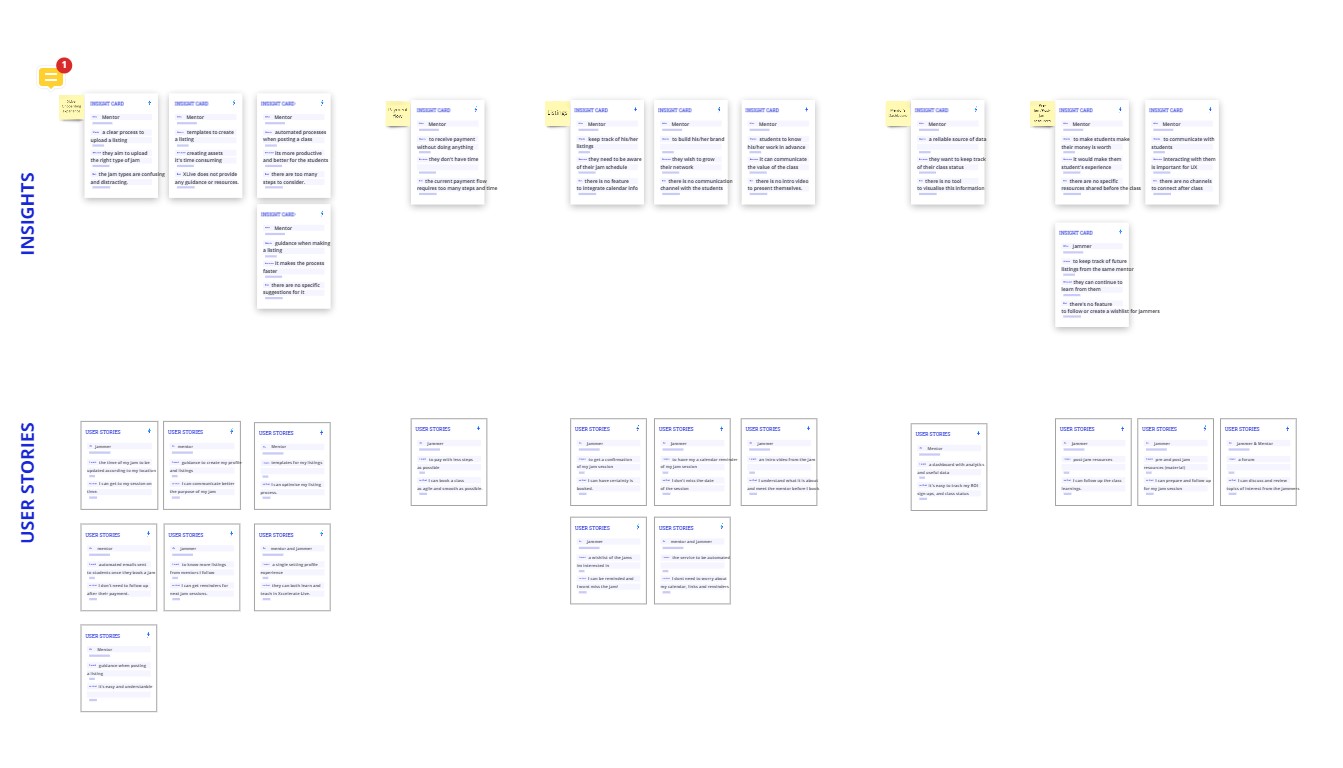
I discussed and prioritized these clusters with the team, by using MoSCoW analysis, and created user stories respectively.
Problem Statement
How might we make listing creations easier to understand?
How might we optimise the whole booking process to improve the overall experience?
Competitive Analysis
While the research findings allowed me to narrow down the problem, I needed some inspiration before I started wireframing.
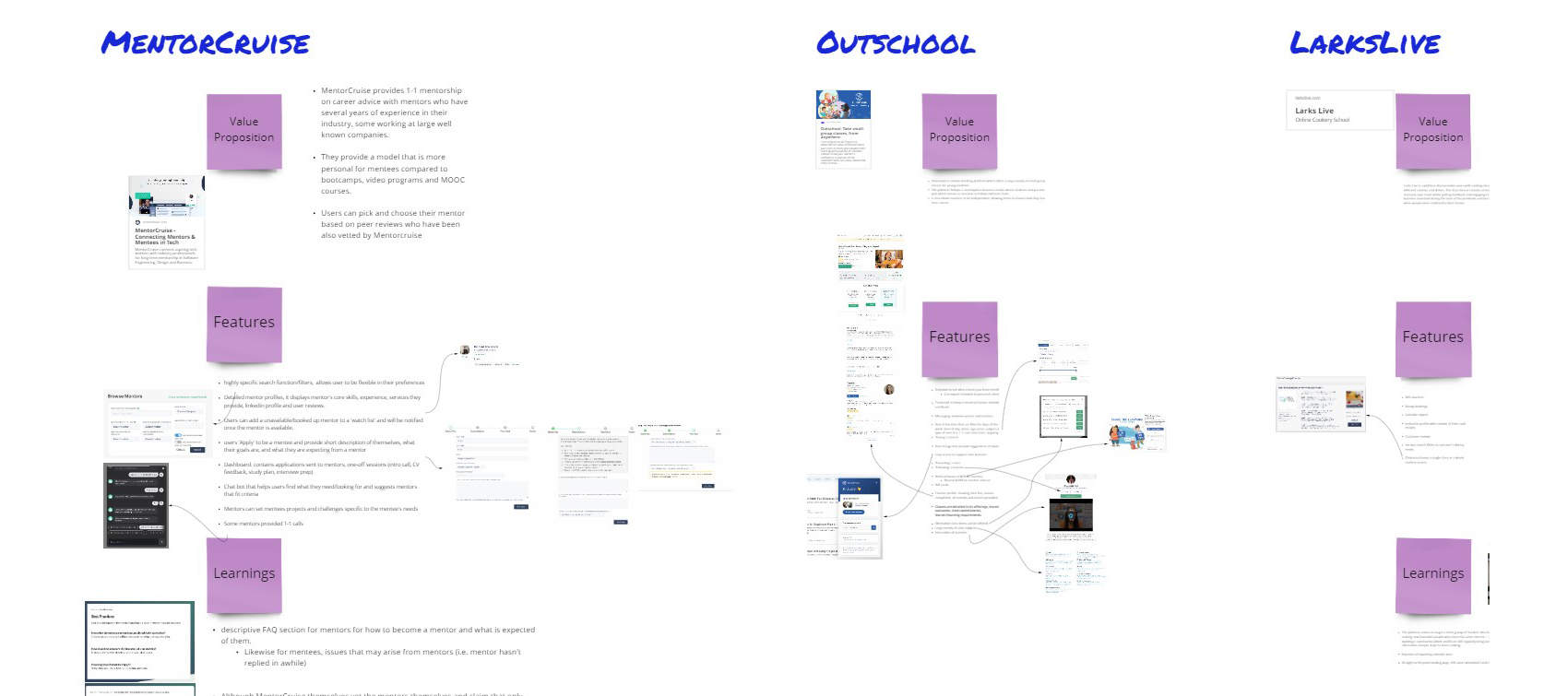
I analyzed popular online learning platforms with a live meeting feature. Some key players included Mentorcruise, Outschool, iTalki, and Larkslive.
Findings
- All have highly specific search function/filters, allows users to be flexible in their preferences
- Detailed mentor profiles showing the mentor's core skills, experience, LinkedIn profile, and user reviews.
- Messaging between mentors and mentees, giving them continuous support
Ideation and Development
The design phases kicked off by planning the information architecture of the platform. Creating user flows to ensure new features were placed in a flow that was intuitive.
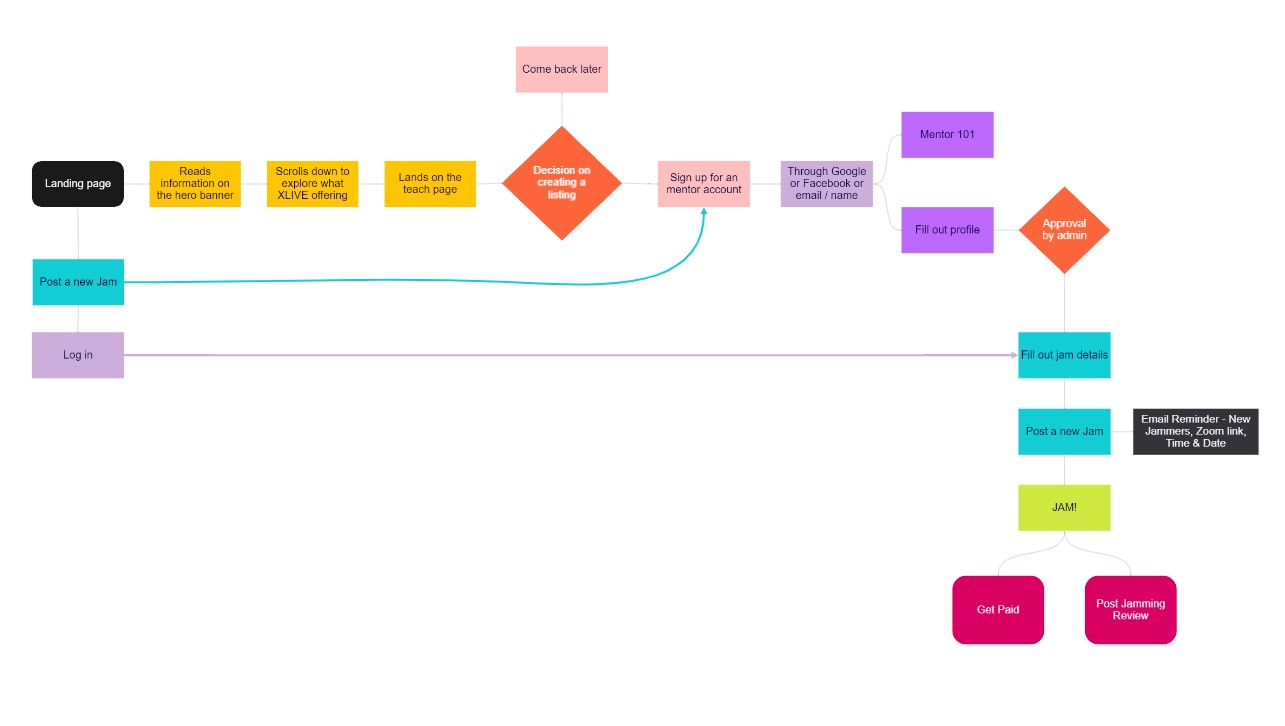
After multiple brainstorming sessions, the product team and I made the design decision:
To make making listing understandable

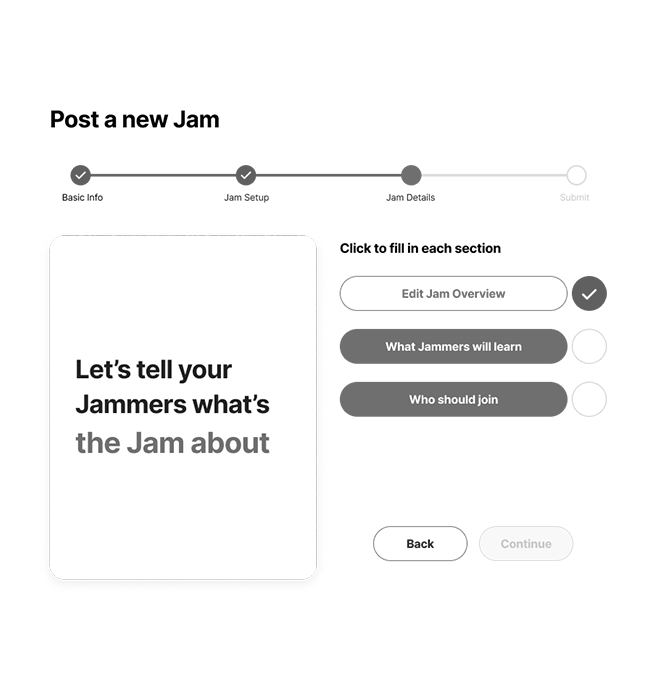
Humanize the listing creation via a positive, conversational, and encouraging process
To improve the searching experience

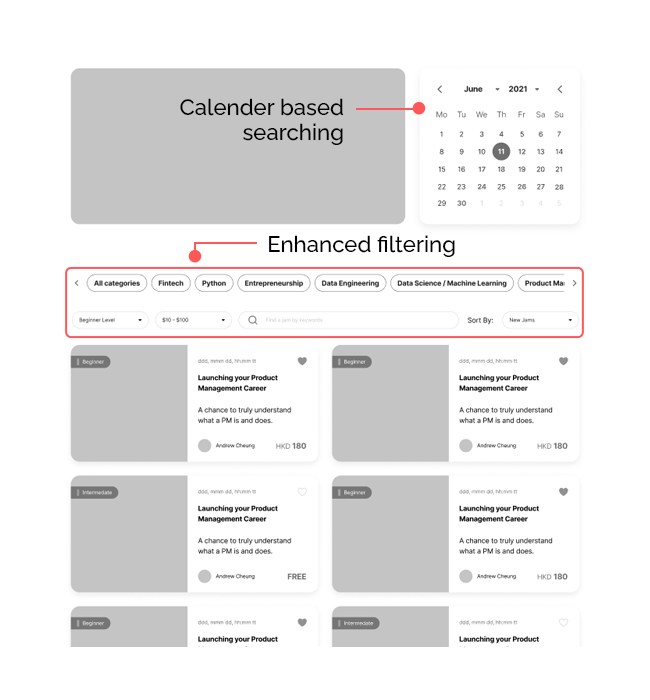
Elevate the time sensibility of event exploration
To optimise the sign up process

Speed up the confirmation process by implementing 1-click checkout feature
Prototype and Test
Mid-fidelity Wireframe
After creating wireframes, I converted them into an interactive prototype and tested the user stories with 4 individuals.
Test Results
- The user can easily and smoothly find a jam in which he can participate in his spare time.
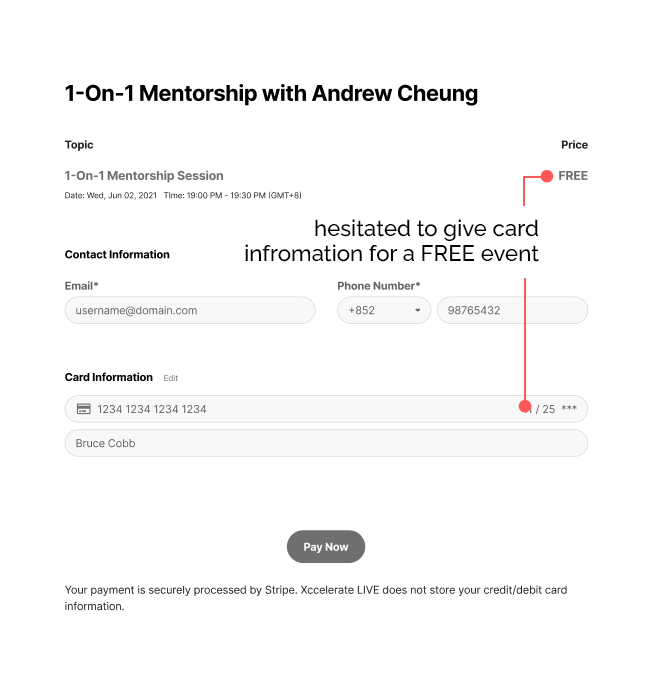
- The user hesitated to provide the card information when signing up for a free event.
- The user created a new listing with no doubt at all.
Iteration
- Credit card information is not required for signing up a free event.
Final Design
Conclusion
What I have learned from this project?
Checking with the development team for the feasibility of the proposed solution in the early stage helped us to speed up the decision-making time.